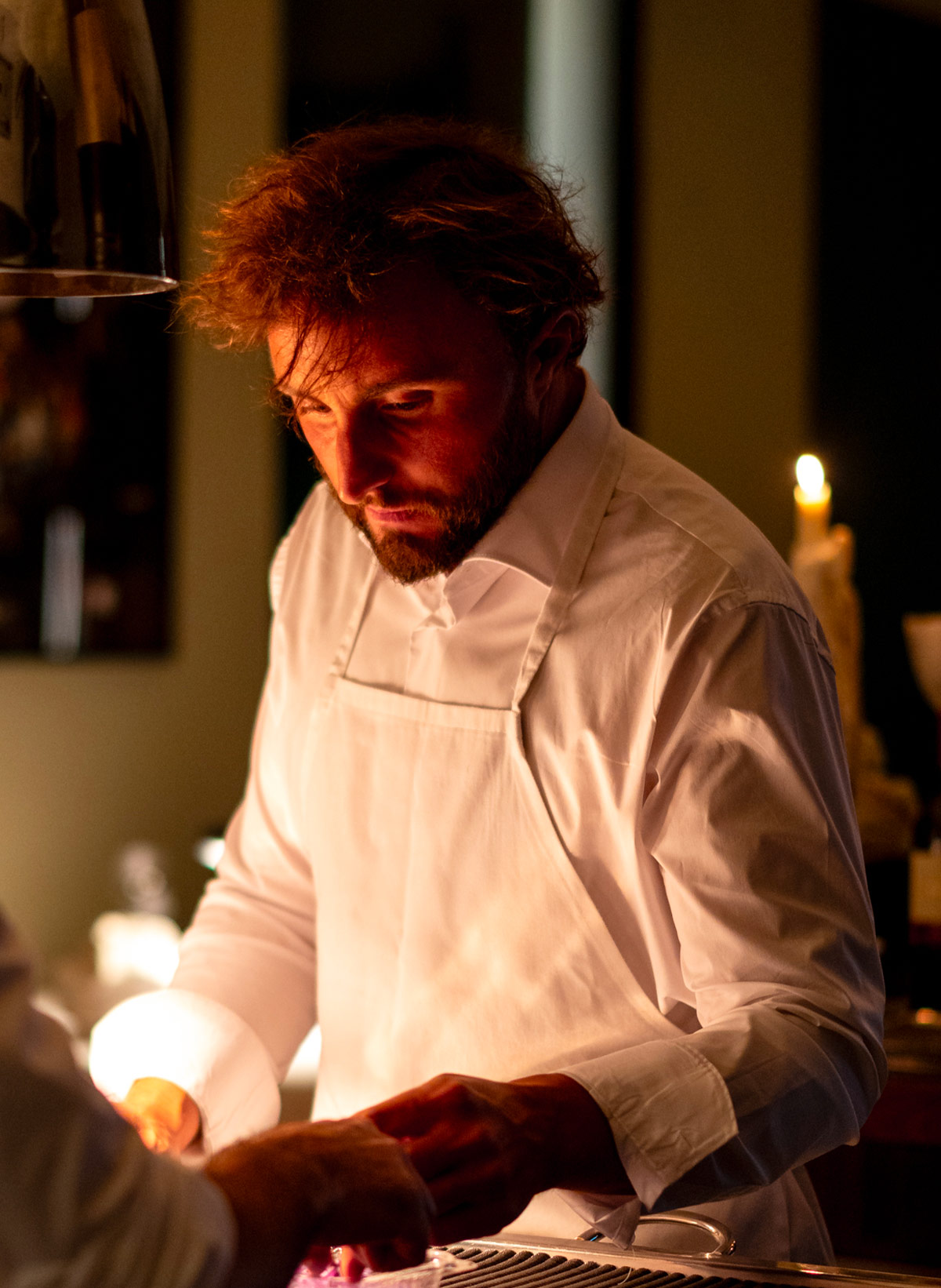
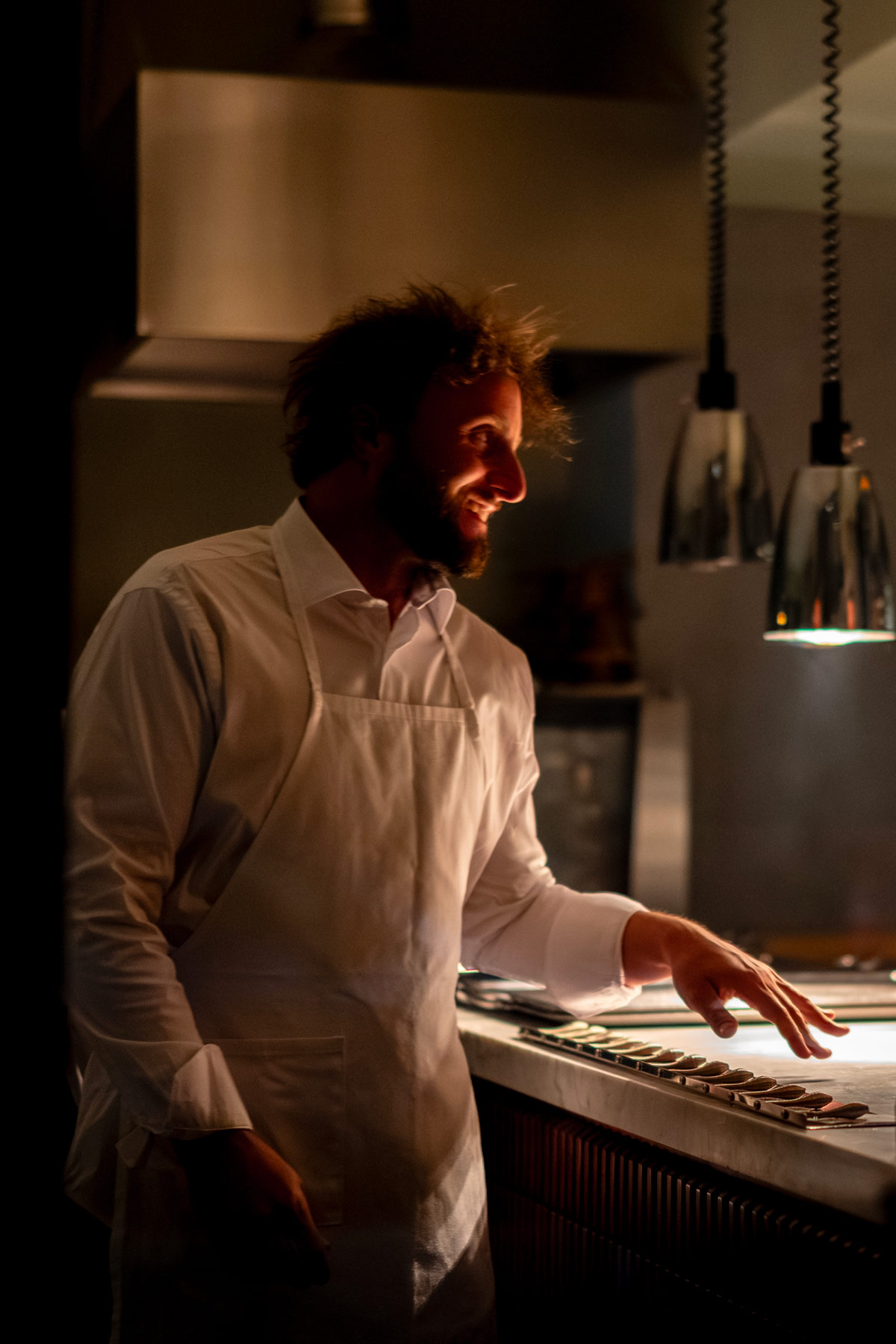
Born on 30 May 1989 in Pescia, Pistoia, Luca inherited his creativity from his grandfather – Carlo Maria Mariani, a famous artist and painter – while from his great-grandmother Valda he learnt the love for authentic flavours.
Since he was young, he found in the act of cooking the main means of expressing his love for art and taste. His career began when he was 14 years old, when he moved to Paris with the dream of learning the fine techniques of french cuisine.
After his parisian experience, he continued his journey in Prague and Vienna; plus he spent five years in Russia, where he worked as general supervisor for a restaurant company operating throughout the country.
In 2012, he graduated from Alma, the International School of Italian Cuisine in Colorno, near Parma. In 2016, he took part in the competition organised by Barilla, ranking among the top ten chefs. During the same period, in Russia, he was awarded the title of Young Chef for S. Pellegrino.
In 2017, he participated in the Top Chef programme, where he won the bronze medal. From 2019 he is regularly involved in the programme La Prova del Cuoco and, in 2022, he took part in Detto Fatto and Vorrei Dirti Che on Rai 2.
AUTEM*
In Latin “Autem*” indicates a conjunction, which can mean either “yet” or “and furthermore.”
A concept that is also echoed by the asterisk on the logo: the urgency to communicate something that has yet to be said, a conjunction of opposites that has yet to be expressed.
Iconic dishes
There’s no shortage of Chef Luca Natalini’s signature dishes, such as the famous “Pasta in Bianco,” the snail-based dish called “As if it were a Bourguignonne,” the daring “Horse and Oyster,” or the “Smoked Eel Salad.” The food offering is complemented by an exclusive selection of cheeses, personally chosen by the Chef and supplied by circa twenty from the best Italian and French dairies.
Autem*’s menu is a constantly evolving experience, built day by day according to the availability of the ingredients that nature offers.
At the heart of the project there is sustainability: every dish is created respecting seasonality, and favouring ingredients from sustainable cultivation methods, such as organic farming and permaculture.
A concrete example of this philosophy is the use of all cuts of meat, from the finest to the so-called ‘fifth quarter’, in a cyclic manner, following the availability of raw materials and reducing waste.
Even breadsticks are served with a butter prepared according to the availability of milk: whether from cow, goat, sheep, buffalo or donkey.
The same principle applies to vegetables and fruit, always seasonal and from small producers, favouring a short and sustainable supply chain.
Even fish is carefully selected: seasonal, from short supply chains and caught by means of responsible techniques such as angling. The objective is not to contribute to the overexploitation of fish and to preserve the balance of marine ecosystems.
The final dish is the result of harmony between technique and ingredients, with the aim of enhancing the raw material and respecting the laws of nature, avoiding all forms of waste.